
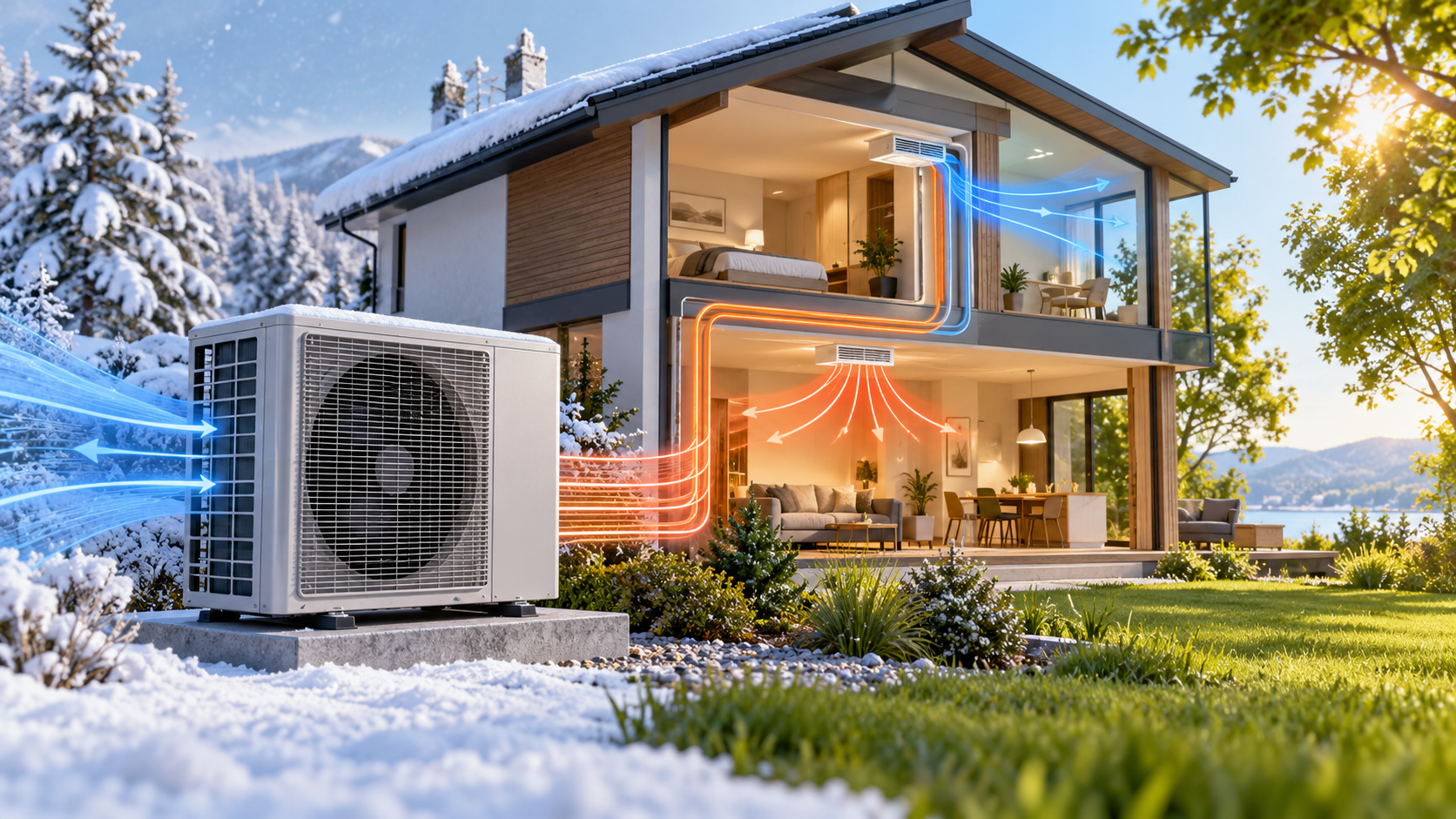
A heat pump sounds like a climate-policy object, but it is really just a clever refrigerator running in both directions.
That is the simplest way to understand it. A refrigerator moves heat from inside the box to the room. An air conditioner moves heat from inside your home to outside. A heat pump can move heat in either direction, so it can cool a home in summer and heat it in winter.
The trick is that moving heat can be much more efficient than making heat.
Why heat pumps are efficient
A gas furnace burns fuel to create heat. Electric resistance heat turns electricity directly into heat. A heat pump uses electricity to move existing heat from one place to another.
Even cold air contains heat energy. The outdoor unit extracts that heat and moves it indoors. In cooling mode, it does the reverse.
Because the machine is moving heat rather than generating it, it can deliver multiple units of heat for every unit of electricity it consumes. That ratio is called the coefficient of performance.
But what about cold climates?
Older heat pumps struggled in very cold weather. Modern cold-climate heat pumps are much better. They use improved compressors, refrigerants, controls, and defrost systems to keep working at lower temperatures.
That does not mean every home should use the same setup. Climate, insulation, ductwork, electricity prices, backup heat, and installation quality all matter.
The technology works. The design still has to fit the building.
Air-source, ground-source, and mini-splits
Most people talking about heat pumps mean air-source heat pumps: an outdoor unit moves heat between outside air and indoor air. These can connect to ducts or to wall-mounted indoor heads called mini-splits.
Mini-splits are useful for homes without ducts, additions, garages, older houses, and rooms that never feel comfortable. They also allow zoning, so one room can be heated or cooled without conditioning the whole house.
Ground-source heat pumps use the more stable temperature underground. They can be very efficient, but installation is more expensive because they require drilling or buried loops. For many homes, air-source systems are the more practical upgrade.
The installation matters more than the brochure
A heat pump is not a toaster. You cannot judge it only by the model number.
Sizing is critical. Too small and it may need backup heat too often. Too large and it may cycle inefficiently, reduce comfort, and fail to dehumidify well. Duct leaks, poor airflow, bad refrigerant charge, and sloppy placement can ruin performance.
The boring contractor details decide whether the shiny technology feels good in January.
What affects the economics
The payback depends on what you are replacing. Moving from electric resistance heat to a heat pump can save a lot because resistance heat is expensive to run. Replacing a cheap gas furnace is more complicated and depends on gas prices, electricity rates, climate, incentives, and how much cooling you need.
The best comparison is not the sticker price. It is total cost over time:
- equipment and installation
- rebates or tax credits
- electricity and fuel prices
- maintenance
- expected equipment life
- comfort improvements
- whether the system also replaces air conditioning
In many homes, the heat pump decision happens when an old AC or furnace is already near replacement. That is when the marginal cost can make the most sense.
Common mistakes
The most common mistake is treating the heat pump like a drop-in box. Homes are systems. A leaky attic, undersized ducts, or poor insulation can make any heating system look worse than it is.
Another mistake is using aggressive thermostat setbacks. Heat pumps often work best when maintaining a steady temperature rather than recovering from a large overnight drop, especially in cold weather. Controls and habits may need to change.
Why they are showing up everywhere
Heat pumps sit at the intersection of several trends: higher-efficiency homes, electrification, cooling demand, climate policy, and better equipment. They are also useful because they replace two systems with one.
For places that already need air conditioning, the argument is especially strong. If you are installing or replacing AC, choosing a heat pump can add efficient heating without a separate machine.
The bottom line
Start with the house, not the hardware. Improve insulation and air sealing where practical. Ask for a load calculation, not a guess based on the old unit. Compare operating costs using local energy prices. Check whether rebates apply.