
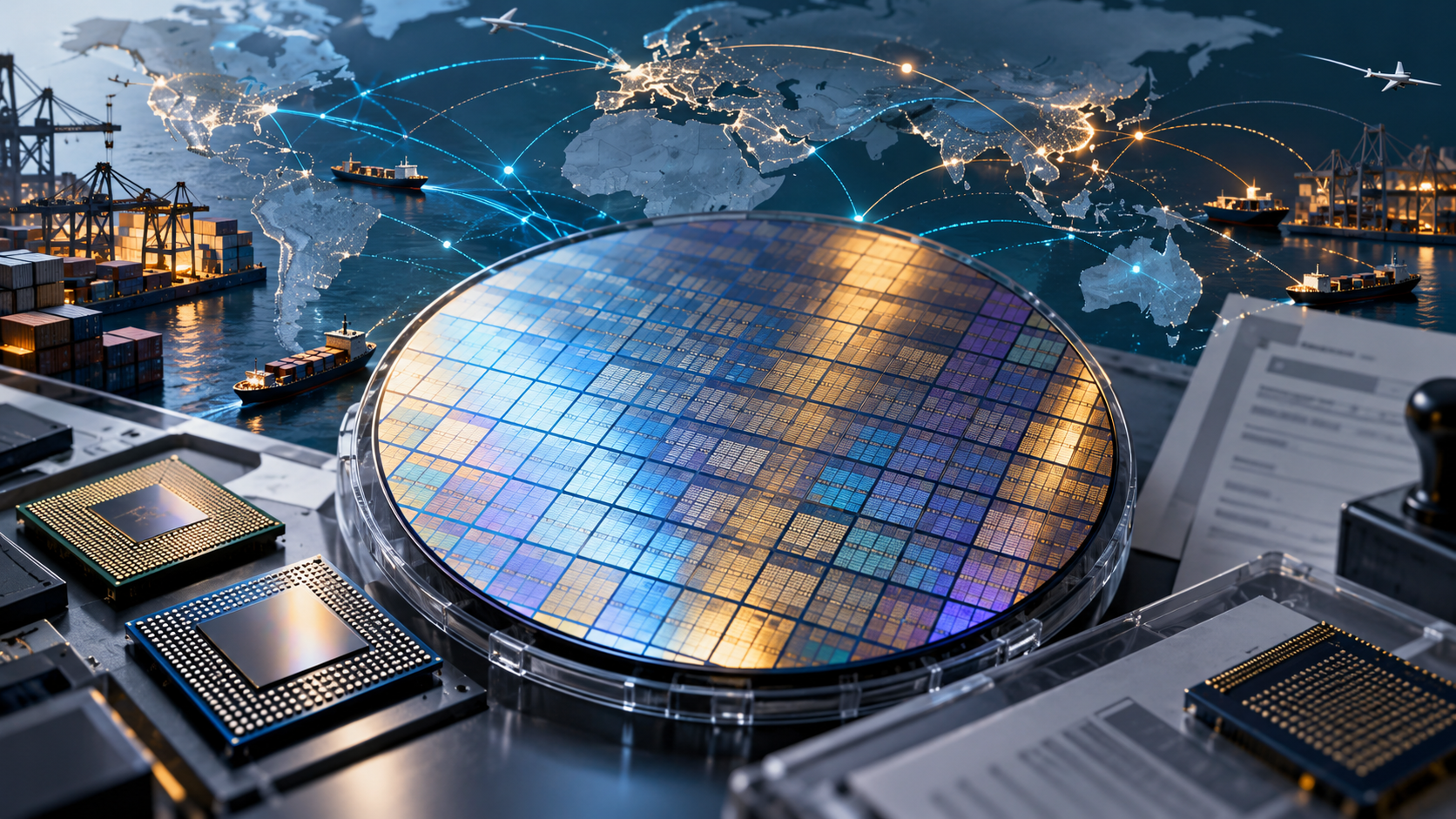
AI looks like a model race, but underneath it is a semiconductor race.
The frontier model is only the visible layer. Beneath it are GPUs and accelerators, high-bandwidth memory, advanced packaging, electronic design automation software, lithography tools, chemicals, substrates, power electronics, and fabrication plants that cost tens of billions of dollars.
The result is a strange kind of geopolitics: the most valuable digital systems depend on one of the most specialized physical supply chains ever built.
Chips are not one industry
People say "chips" as if the word describes one thing. It does not.
There are leading-edge logic chips used for AI training and inference. There are memory chips, including high-bandwidth memory that feeds AI accelerators. There are mature-node chips used in cars, appliances, industrial machines, and defense systems. There are analog chips, sensors, power chips, and radio-frequency components.
Shortages in any of these categories can matter, but they matter differently. A shortage of AI accelerators slows model development. A shortage of mature automotive chips can stop car factories. A shortage of power electronics can delay grid and clean-energy projects.
That is why semiconductor policy is so difficult: the supply chain is broad, but the choke points are narrow.
The revenue numbers explain the urgency
The Semiconductor Industry Association reported that global semiconductor sales reached a record $795.6 billion in 2025. It also describes a market being pulled upward by AI, advanced computing, and broad digitization.
Those numbers help explain why governments care. Chips are not just inputs to phones and laptops anymore. They are inputs to national productivity, military systems, cloud infrastructure, industrial automation, vehicles, and energy networks.
Control over chip supply is not the same thing as control over oil, but it has a similar strategic flavor: whoever controls the scarce input has leverage.
Where the choke points sit
The advanced chip map is unusually concentrated.
The most advanced logic manufacturing is centered around a small number of firms and geographies. Extreme ultraviolet lithography machines come from an even narrower supply base. Advanced packaging capacity is becoming critical because AI chips increasingly depend on tightly connected compute and memory. High-bandwidth memory has its own supplier constraints.
This concentration creates efficiency in normal times. It also creates geopolitical exposure.
If trade restrictions, conflict, natural disasters, cyberattacks, or energy shortages hit a choke point, the effects can travel through the entire AI economy.
Export controls changed the game
The United States and its partners have used export controls to limit China's access to the most advanced AI chips and chipmaking tools. China has responded with its own industrial policy, procurement shifts, and controls on strategic materials.
This is not a simple "ban chips" story. Modern export controls are technical. They distinguish performance thresholds, interconnect speeds, end users, cloud access, manufacturing equipment, software, and destination countries.
That complexity creates a moving target. Companies redesign chips to fit rules. Governments update rules. Buyers stockpile. Competitors seek substitutes.
The policy world starts to resemble a compiler optimization problem with national-security consequences.
Self-sufficiency is harder than it sounds
Every major economy wants more domestic chip capacity. The United States has the CHIPS Act. Europe has the European Chips Act. Japan, South Korea, Taiwan, India, and China all have strategic programs.
But semiconductor self-sufficiency is not a switch. A country can build fabs and still depend on foreign tools, gases, wafers, photoresists, packaging, design software, or skilled engineers. The full stack is too complex for quick duplication.
The realistic goal is not total independence. It is resilience: fewer single points of failure, more trusted capacity, and enough redundancy that a shock does not stop whole industries.
Why this matters for AI users
Most people will never buy an AI accelerator. They will still feel the chip map indirectly.
Chip scarcity affects cloud prices. Cloud prices affect startup costs. Hardware limits affect model size, latency, and availability. Export controls affect which countries can access frontier tools. Energy and chips together shape where AI services are built.
The software future is being routed through hardware geography.
That is the quiet lesson of the AI boom: intelligence may scale in code, but power still lives in factories.